

Choosing the right platform for your online business or app development is essential in 2025 to ensure growth and efficiency. Shopify and Bubble.io each offer unique strengths designed to meet different needs and skill levels.
Shopify is a leading eCommerce platform known for its user-friendly interface, powerful sales tools, and seamless integrations, making it ideal for entrepreneurs focused on creating scalable online stores.
Meanwhile, Bubble.io provides a robust no-code web app builder experience, allowing users to build highly customizable web applications without needing advanced programming skills.
This comprehensive comparison highlights their key features, pricing plans, and best use cases, empowering you to make an informed decision and choose the platform that best supports your business objectives and technical capabilities.
Table of Contents
- What is Shopify?
- What is Bubble.io?
- Shopify vs Bubble.io: Pricing
- Shopify vs Bubble.io: Templates
- Shopify vs Bubble.io: Features
- Shopify vs Bubble.io: Security
- Shopify vs Bubble.io: Performance
- Shopify vs Bubble.io: Customer Support
- Shopify vs Bubble.io: Comparison Table
1. What is Shopify?

Shopify is a leading eCommerce platform launched in 2006, designed to help businesses create, manage, and grow online stores with ease.
It offers a comprehensive suite of tools, including customizable templates, secure payment processing, and inventory management, making it accessible for beginners and powerful enough for large enterprises.
Shopify’s user-friendly interface and extensive app ecosystem allow merchants to build scalable, professional websites without needing deep technical skills. Its cloud-based infrastructure ensures reliable hosting, fast loading speeds, and strong security for a seamless shopping experience.
Pros:
✔ User-Friendly Interface: Easy for beginners to set up and manage stores without coding knowledge.
✔ Extensive App Ecosystem: Thousands of apps to add extra features and integrations.
✔ Secure Payment Processing: Supports multiple payment gateways with PCI compliance.
✔ Customizable Templates: Wide selection of professional, mobile-responsive themes.
✔ Scalable Platform: Suitable for small startups to large enterprises with growing needs.
Cons:
❌ Transaction Fees: Additional fees apply if not using Shopify Payments.
❌ Monthly Pricing: Can become costly with added apps and higher-tier plans.
❌ Limited Customization: Advanced design changes may require coding skills or developer help.
❌ Content Management: Blogging and content features are less robust compared to dedicated CMS platforms.
❌ Checkout Flexibility: Limited customization options on the checkout process for non-Shopify Payments users.
2. What is Bubble.io?
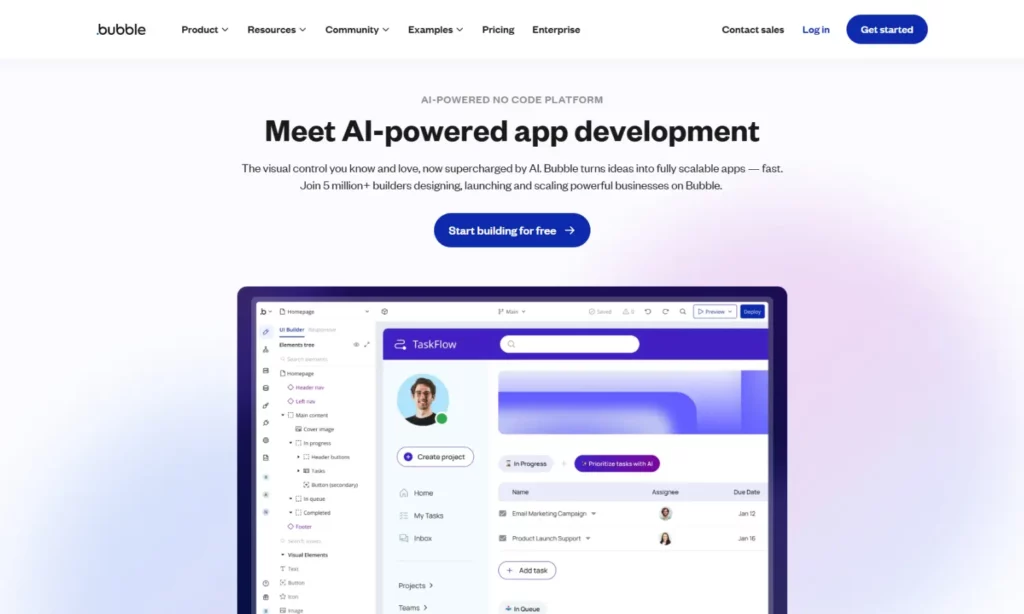
Bubble.io is a powerful no-code web app builder launched in 2012, designed to enable users to create fully functional web applications without writing code.
It offers a visual drag-and-drop editor combined with workflow automation, database management, and API integrations, making it ideal for entrepreneurs, startups, and businesses seeking custom software solutions quickly.
Bubble.io empowers users to build complex, dynamic apps like marketplaces, social networks, and SaaS platforms without relying on traditional development. Its flexibility and scalability make it a popular choice for those who want to innovate without deep technical expertise.
Pros:
✔ No-Code Development: Build complex web applications without writing code.
✔ Flexible Workflows: Automate processes and user interactions with powerful visual logic.
✔ Custom Database: Create and manage your data structures tailored to your app’s needs.
✔ API Integrations: Connect with third-party services for extended functionality.
✔ Scalable Platform: Suitable for startups and growing businesses with evolving requirements.
Cons:
❌ Learning Curve: Visual programming can be complex for complete beginners.
❌ Performance Limits: Apps with heavy workflows may experience slower load times.
❌ Design Constraints: Less design flexibility compared to traditional front-end frameworks.
❌ Pricing: Advanced features and higher usage tiers can become expensive.
❌ Mobile App Support: Primarily focused on web apps; mobile native support is limited.
3. Shopify vs Bubble.io: Pricing
Shopify Pricing
| Aspects | Starter | Basic | Shopify | Advanced | Plus |
| Monthly Billed | $5 | $39 | $105 | $399 | $2300 |
| Annual Billed | — | $29 | $79 | $299 | Custom |
| Custom Domain | ❌ | ✔ | ✔ | ✔ | ✔ |
| Storage | Limited | Unlimited | Unlimited | Unlimited | Unlimited |
| Payment Methods | Shopify Payments | Credit cards, PayPal, Apple Pay, etc. | All major gateways | All major gateways | Enterprise-grade solutions |
| Transaction Fees | 2.9% + 30¢ | 2.9% + 30¢¢ | 2.9% + 30¢ | 5% per transaction | Custom rates |
Bubble.io Pricing
| Aspects | Free | Starter | Growth | Team | Enterprise |
| Monthly Billed | $0 | $32 | $134 | $399 | Custom |
| Annual Billed | $0 | $29 | $119 | $349 | Custom |
| Custom Domain | ❌ | ✔ | ✔ | ✔ | ✔ |
| Storage | 500 MB | 2 GB | 10 GB | 50 GB | Custom |
| Payment Methods | Stripe | Stripe, PayPal | Stripe, PayPal, others | Custom integrations possible | Full integration support |
| Transaction Fees | — | — | — | — | Negotiable |
4. Shopify vs Bubble.io: Templates
Shopify Templates

Shopify Templates are professionally designed, mobile-responsive themes crafted to help merchants create visually appealing and user-friendly online stores quickly. These templates cater to various industries, from fashion and electronics to food and wellness, ensuring a tailored look that matches your brand identity.
Each template offers customizable layouts, flexible navigation options, and built-in features optimized for eCommerce performance and conversion.
With easy-to-use customization tools, merchants can adjust colors, fonts, images, and page sections without coding. This flexibility ensures a consistent brand experience across devices, enhancing customer trust and engagement.
Best Shopify Templates:
- Debut – Perfect for beginners and small stores
- Brooklyn – Ideal for apparel and fashion brands
- Narrative – Great for storytelling and visual-heavy products
- Supply – Designed for large inventories and wholesale
- Minimal – Clean and simple for various niches
Bubble.io Templates
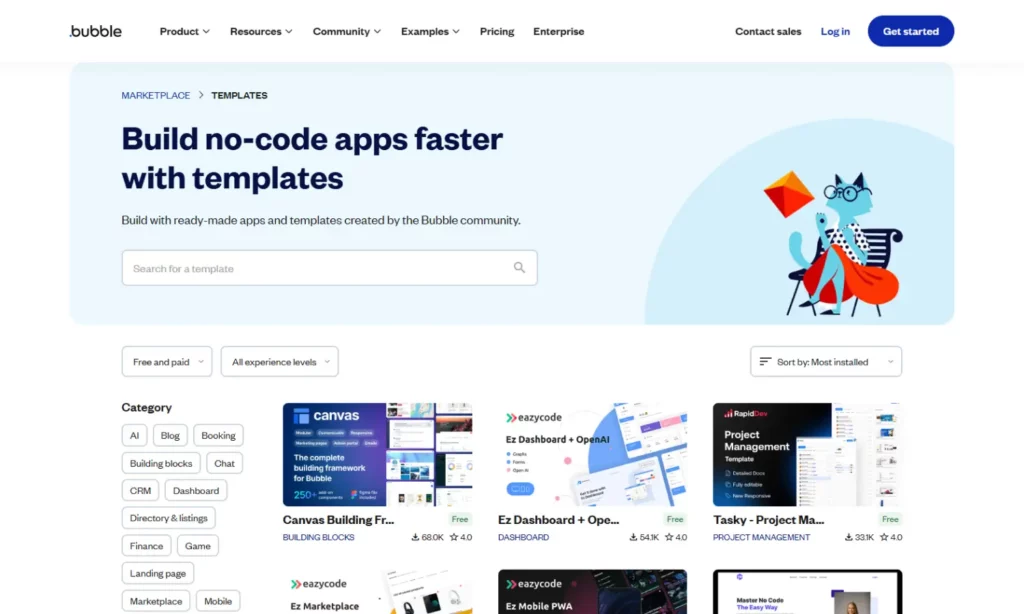
Bubble.io Templates are versatile, no-code app designs created to accelerate the development of complex web applications. These templates come with pre-built workflows, user interfaces, and database structures, making it easier for entrepreneurs and developers to launch fully functional apps quickly.
Each template is customizable through Bubble’s visual editor, allowing users to tailor layouts, features, and logic without coding.
Bubble.io offers a broad range of free and premium templates that cater to different business models and use cases, helping reduce development time while maintaining a professional look and feel.
Popular Bubble.io Templates:
- Task Manager – Productivity and team collaboration apps
- Marketplace – Multi-vendor eCommerce platforms
- Social Network – Community and user interaction-focused apps
- CRM System – Customer relationship management tools
- Booking Platform – Appointment and reservation systems
5. Shopify vs Bubble.io: Features
Shopify Features
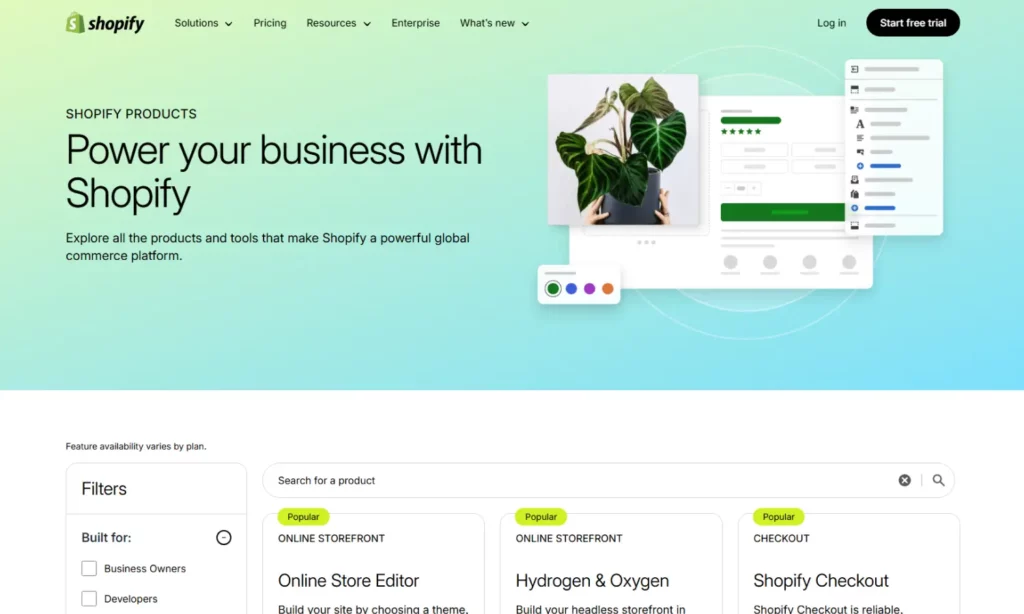
When selecting an eCommerce platform, focusing on features that enhance store management, user experience, and business growth is crucial.
Shopify offers a comprehensive set of tools that empower merchants to build professional, high-performing online stores with ease. Its seamless integration and scalability make it suitable for businesses of all sizes aiming to grow online successfully.
Here are the key features that make Shopify a top choice in 2025:
- User-Friendly Dashboard
Manage products, orders, and customer information effortlessly through an intuitive control panel. - Mobile-Responsive Themes
Themes automatically adjust to look great on smartphones, tablets, and desktops. - Integrated Payment Gateways
Supports multiple payment methods and currencies for seamless, secure checkout. - Extensive App Store
Easily add marketing, SEO, analytics, and inventory tools to customize your store. - Automated Shipping & Tax Calculations
Simplifies logistics by automatically handling shipping rates and tax rules.
Bubble.io Features

When choosing a no-code development platform, Bubble.io stands out with powerful features that enable users to build fully functional web applications without coding. Its visual editor and robust backend capabilities empower entrepreneurs and developers to create complex, customizable apps quickly and efficiently.
Bubble.io supports scalability and integrations, making it a popular choice for startups and businesses aiming to launch custom web solutions.
Here are the key features that make Bubble.io a top no-code platform in 2025:
- Visual Drag-and-Drop Editor
Design interactive web apps with an intuitive, code-free interface. - Customizable Workflows
Create complex logic and automate processes without writing code. - Database & Backend Management
Build and manage databases directly within the platform to support dynamic app functionality. - API Integration
Connect with external services and APIs to extend app capabilities. - Responsive Design Tools
Ensure apps look great and function well across all devices.
6. Shopify vs Bubble.io: Security
Shopify Security
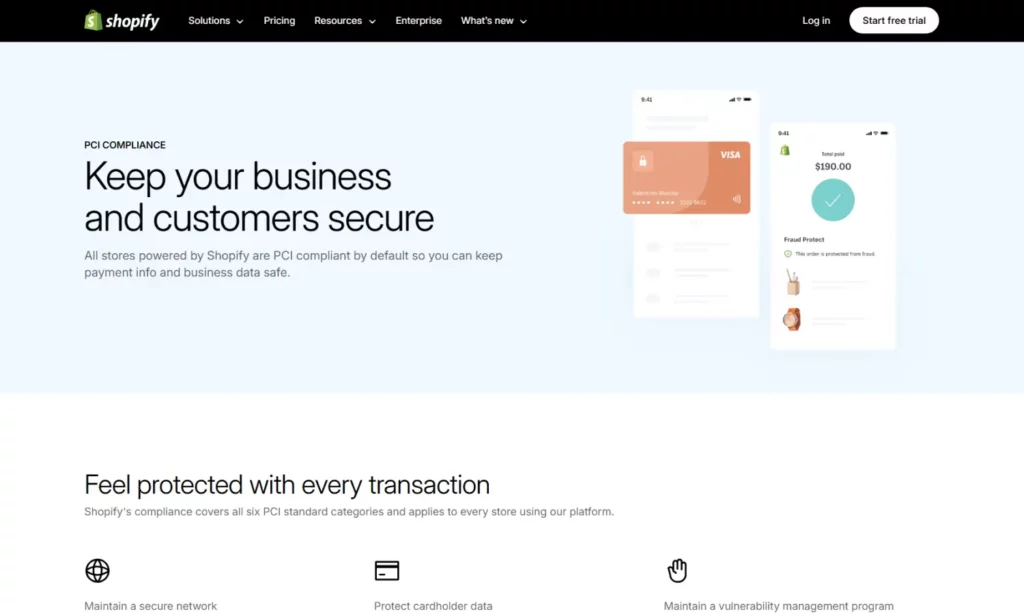
Shopify ensures robust security measures designed to protect both merchants and customers, making it a trusted platform for online stores worldwide.
Its comprehensive security framework covers data protection, fraud prevention, and compliance with industry standards.
Key aspects of Shopify security include:
- PCI DSS Compliance: Shopify is fully compliant with the Payment Card Industry Data Security Standard, ensuring secure processing of credit card transactions.
- SSL Encryption: All stores come with free SSL certificates, encrypting data exchanged between customers and websites to protect sensitive information.
- Fraud Detection: Built-in tools analyze orders for suspicious activity, helping prevent chargebacks and fraudulent transactions.
- Secure Hosting: Shopify’s infrastructure includes advanced firewalls, DDoS protection, and continuous monitoring to safeguard websites from attacks.
- Two-Factor Authentication (2FA): Merchants can enable 2FA for added account security during login.
Bubble.io Security
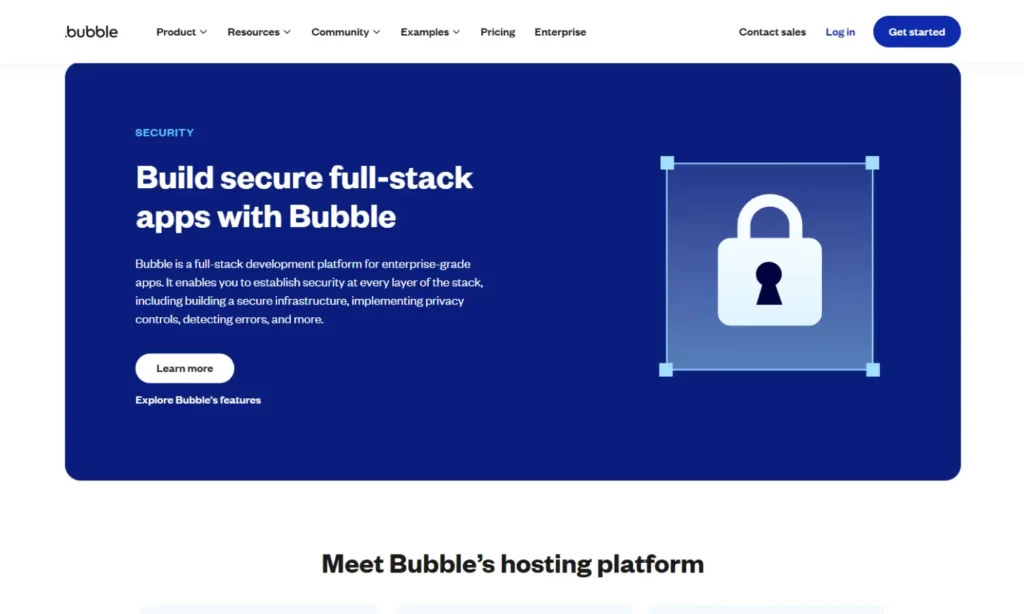
Bubble.io provides a secure no-code platform designed to protect user data and ensure safe app development.
It uses SSL encryption for data transfer and relies on Amazon Web Services (AWS) infrastructure, which offers strong physical and network security.
Key Security Features:
- Data Encryption: All data is encrypted in transit via HTTPS.
- User Authentication: Supports user login systems with options for secure password management.
- Access Control: Developers can set privacy rules to control who accesses what data.
- API Security: Offers authentication options to secure API endpoints.
- DDoS Protection: Benefits from AWS security and network-level protections.
7. Shopify vs Bubble.io: Performance
Shopify Performance
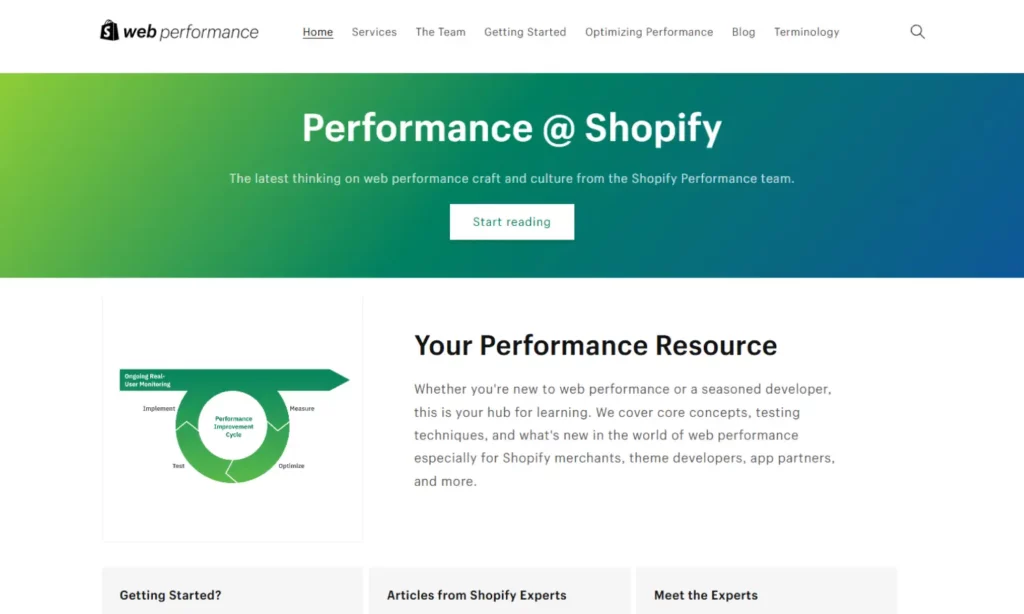
Shopify is built for fast, reliable, and scalable online stores that handle traffic surges smoothly. Its platform leverages a global content delivery network (CDN) to deliver website content quickly to users worldwide, reducing load times and improving user experience.
Key Shopify Performance Features:
- Fast Page Loading: Optimized servers and CDN ensure quick loading on all devices.
- Automatic Scalability: Shopify automatically adjusts resources during traffic spikes.
- 99.9% Uptime Guarantee: Reliable hosting minimizes downtime and keeps stores accessible.
- Optimized Checkout: A Smooth and speedy checkout process to reduce cart abandonment.
- Regular Updates: Continuous platform improvements boost speed and security.
Bubble.io Performance
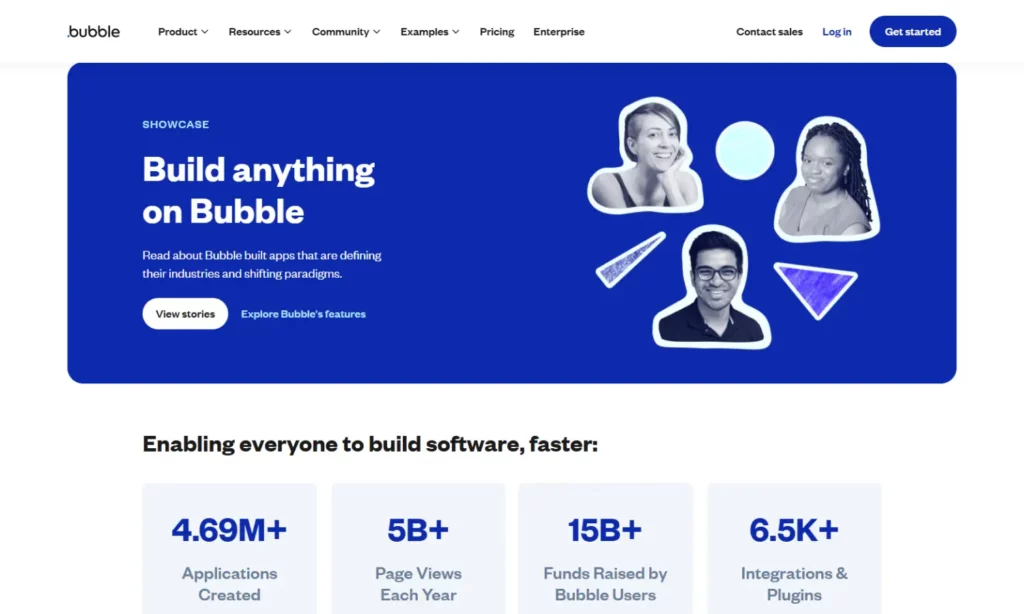
Bubble.io is a powerful no-code platform focused on flexibility and rapid app development, but its performance depends heavily on how the app is built and optimized. Since it runs on shared cloud infrastructure, efficient design is key to maintaining speed and responsiveness.
Key Bubble.io Performance Features:
- Customizable Workflows: Performance varies based on how logically and efficiently workflows are structured.
- Shared Hosting Environment: Resource sharing can affect load times during traffic spikes unless upgraded to a dedicated plan.
- Automatic Scaling (with Plans): Higher-tier plans offer more capacity and faster response times.
- Real-Time Updates: Supports dynamic content and live data syncing, which may slow down if overused.
- Page Load Optimization: Developers can improve speed by minimizing complex elements, using reusable components, and optimizing database queries.
8. Shopify vs Bubble.io: Customer Support
Shopify Customer Support
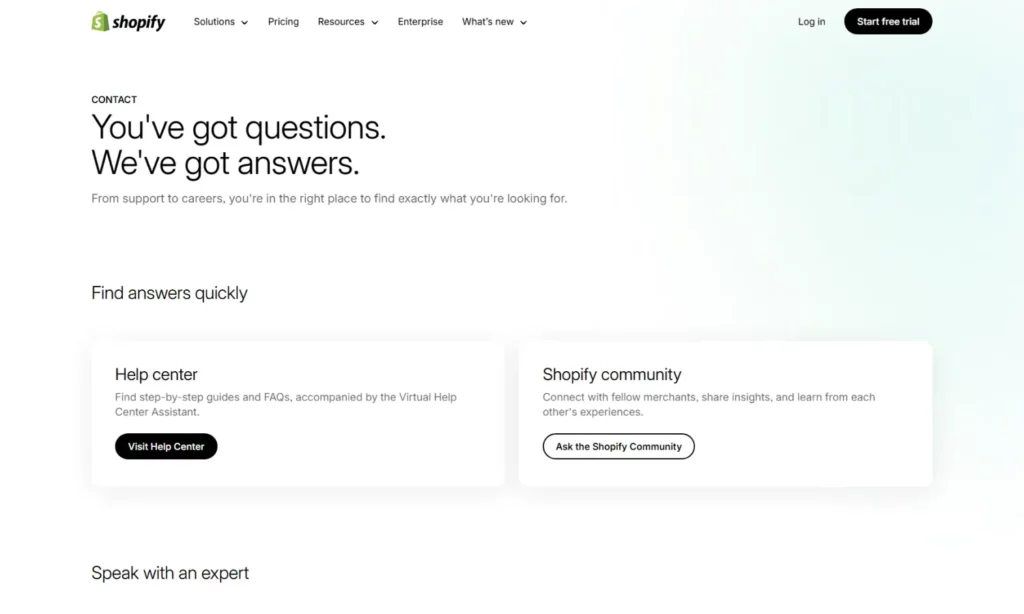
Shopify provides extensive and dependable customer support designed to help users at every stage of their online business journey. Its support system includes 24/7 assistance through various channels and a robust library of self-service resources.
Key Shopify Support Features:
- 24/7 Live Chat and Email Support: Instant help is available anytime, especially useful for urgent issues.
- Phone Support (Selected Plans): Direct access to support agents for faster resolutions.
- Help Center & Documentation: Detailed guides, tutorials, and FAQs for troubleshooting and learning.
- Community Forums: Active community where users and experts share solutions and strategies.
- Shopify Academy & Webinars: Free educational resources to help users grow their skills.
Bubble.io Customer Support
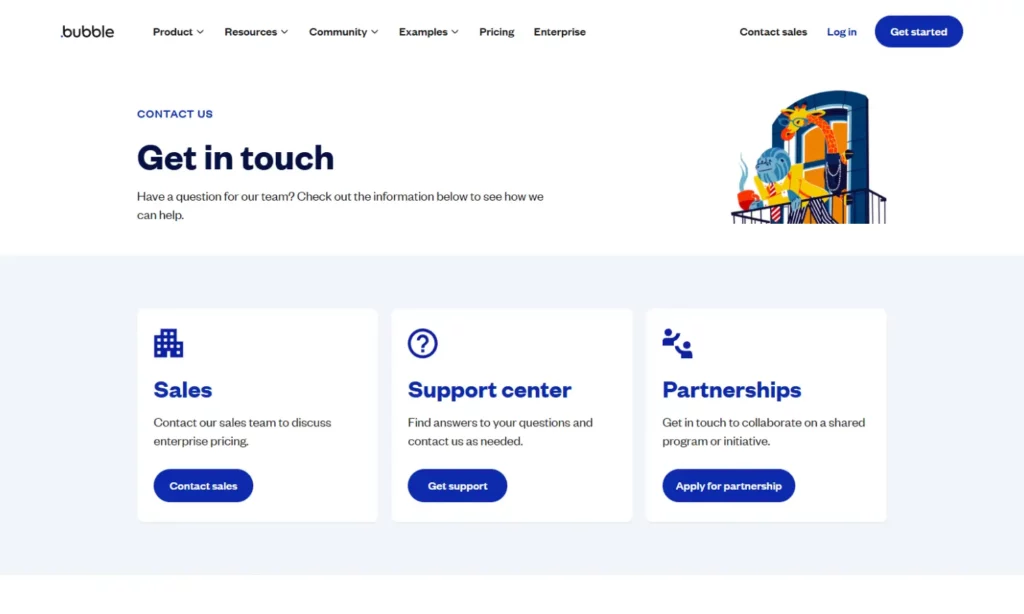
Bubble.io offers support tailored to no-code developers and teams building custom web apps, but its level of service depends on your pricing plan. While lower tiers rely more on community and documentation, higher tiers gain faster, more direct access to the support team.
Key Bubble.io Support Features:
- Email-Based Support: Available across all plans, with priority response times for paid users.
- Community Forum: A vibrant and active space where users can ask questions and share solutions.
- Extensive Documentation: Step-by-step guides, tutorials, and how-tos for every major feature.
- Priority Support (Higher Plans): Faster response times and more direct support for Professional and Production plan users.
- Bubble Bootcamps & Courses: Paid educational programs to learn app-building more effectively.
9. Shopify vs Bubble.io: Comparison Table
| Aspects | Shopify | Bubble.io |
| Free Plan | ❌ | Full no-code logic, database, workflows, responsive design |
| Monthly Billed Starting Price | $39 | $32 |
| Annual Billed Starting Price | $29 | $29 |
| Templates | 100+ sleek, eCommerce-focused themes | SSL, privacy rules, and manual control for data access |
| Features | Built-in selling tools, app store, POS, multi-channel integration | Online stores, DTC brands, and Dropshipping |
| Security | PCI-compliant, SSL, secure checkout, 2FA | SSL, privacy rules, manual control for data access |
| Performance | Fast loading, cloud hosting, built-in CDN | Online stores, DTC brands, and Dropshipping |
| Best For | 24/7 live chat, phone, email, and large help center | MVPs, Custom tools, SaaS products, No-code startups |
| Customer Support | 24/7 live chat, phone, email, large help center | Email, forum, docs, priority support on higher plans |
Conclusion
Deciding between Shopify and Bubble.io in 2025 isn’t about which platform is better; it’s about which one is better suited to your goals.
- If your priority is building a professional online store with robust checkout systems, integrated marketing tools, and multi-channel selling, then Shopify is a clear winner. It’s optimized for scalability, ease of use, and powerful eCommerce functionality that supports businesses of all sizes.
- In contrast, Bubble.io stands out for those wanting to create custom web apps or SaaS platforms without relying on developers. It gives users a visual editor, advanced database control, and logic-based workflows, making it a strong choice for building interactive platforms, MVPs, and internal tools.
Final Thoughts:
- If you need a powerful platform for professional online stores with seamless sales tools, Shopify is the best choice.
- But if building custom web apps or interactive platforms without coding is your focus, Bubble.io will serve you better.
“We help founders choose the right platform for scaling, selling, or building custom tools.
Schedule your free strategy call and avoid costly missteps from day one.“

VictorFlow – Webflow Premium Partner
FAQ
1. Which platform is easier for beginners?
Shopify offers a user-friendly interface designed for the quick setup of online stores, making it ideal for beginners. Bubble.io has a steeper learning curve due to its no-code app-building features, but it provides greater customization.
2. Can I build an online store on Bubble.io?
Yes, you can build an online store on Bubble.io, but it requires more manual setup and customization compared to Shopify’s ready-made e-commerce tools.
3. Which platform offers better scalability?
Shopify is highly scalable for growing eCommerce businesses with robust hosting and infrastructure. Bubble.io scales well for complex custom apps but may require more technical management.
4. Does Shopify support third-party integrations?
Yes, Shopify has an extensive app marketplace with thousands of integrations for marketing, payments, shipping, and more.
5. Is Bubble.io suitable for agencies or freelancers?
Bubble.io is great for agencies and freelancers who want to build custom web apps or MVPs quickly without coding.
6. What about security on both platforms?
Both Shopify and Bubble.io provide strong security features, including SSL encryption, data backups, and compliance with industry standards.


